Tree Pruning in Enfield
Looking for tree pruning in Enfield that is careful, practical, and suited to your property? Whether you manage a family garden in Bush Hill Park, a terrace near Enfield Town, a shopfront close to the high street, or a larger plot in the leafier parts of the borough, the way a tree is pruned can make a real difference to safety, appearance, sunlight, and the long-term health of the tree. A well-planned pruning visit is not just about cutting branches back. It is about understanding the species, the season, the setting, and what you want the tree to do for the space around it.
Local customers often need tree work for very practical reasons: overhanging limbs blocking light, branches brushing roofs, growth interfering with gutters, a tree becoming too heavy on one side, or simply a specimen that has become untidy after years of natural growth. In Enfield, where homes range from period houses and post-war estates to newer developments and commercial premises, access and property layout can vary a lot. That is why using a local team for tree pruning services matters. It means the work is planned around the reality of your street, your garden, and your access, not a one-size-fits-all approach.
If you are comparing options for tree pruning Enfield customers commonly ask about, it helps to know what a proper service should include, when pruning is needed, and how to judge whether a tree only needs shaping or whether it requires more considered crown management. Below, you will find a clear overview of the service, what happens on the day, what affects cost, and why local knowledge is useful across Enfield and nearby areas.
What Tree Pruning Does for Your Property

Tree pruning is the selective removal of branches to improve the condition, structure, or appearance of a tree. For homeowners, landlords, housing managers, and business owners, the benefits are often immediate. Pruning can reduce the risk of branches rubbing against buildings, improve light into gardens and rooms, encourage healthier growth, and make trees look more balanced and tidy. It can also help retain a tree safely where it might otherwise become too large or awkward for its location.
In residential areas across Enfield, pruning is commonly requested for trees overhanging driveways, blocking pavements, growing over fences, or shading lawns and planting beds. In commercial settings, the reasons can be different: clearing sightlines for customers, keeping entrances safe, preventing branch interference with signage or lighting, and maintaining a neat appearance for premises that see regular foot traffic. Well-timed pruning is usually a lot less disruptive than leaving a tree until it needs heavier intervention later.
It is also worth noting that not every tree needs the same treatment. Some trees respond best to light crown thinning, while others may need crown lifting to improve clearance below. Some young trees benefit from formative pruning to shape strong structure early, while mature trees may only need targeted removal of dead, damaged, or crossing limbs. A sensible local service will explain the difference before any cut is made.
Tree Pruning Services for Enfield Homes and Businesses

Every property has different needs, and that is especially true in a borough like Enfield, where gardens can be narrow, side access can be tight, and roadside trees may sit close to parked cars, boundary walls, or overhead cables. A good tree pruning service should be flexible enough to handle private gardens, shared spaces, rental properties, retail units, schools, offices, and managed estates. The aim is to deliver a tidy, controlled result with minimal disturbance to neighbours and daily routines.
Common pruning requests include:
- Removing dead, dying, or damaged branches
- Reducing branches that overhang roofs, conservatories, or extensions
- Lightening dense canopies to allow more daylight through
- Raising low branches to improve access or visibility
- Shaping trees for appearance and balance
- Reducing rubbing or crossing branches that may cause future damage
- Managing young trees through formative pruning
- Regular maintenance for trees in gardens, courtyards, and commercial grounds
For customers searching for tree pruning in Enfield, this range of services means you do not have to guess which type of work is needed. A site visit can identify whether a tree needs light maintenance, a more structured crown adjustment, or simply deadwood removal to keep it safe and presentable.
Why Local Knowledge Matters in Enfield

Enfield includes a mix of housing styles, streets, and access conditions, and that affects how pruning work is carried out. Some homes have narrow side passages, shared driveways, and limited rear access. Others sit on busier roads where vehicle parking needs to be planned carefully. In parts of the borough, mature gardens and established trees bring extra complexity, while newer developments may have ornamental planting that benefits from regular, light maintenance rather than heavy cutting.
A local tree team is more likely to understand practical issues such as neighbour access, restricted parking, garden entry points, and the need to keep communal spaces usable. That local experience can save time on the day and reduce disruption. It also helps with sensible advice about timing, especially when pruning needs to work around bird nesting season, flowering patterns, or the tree’s natural growth cycle.
Local relevance matters for business customers too. Shops, cafés, offices, schools, care settings, and other commercial premises in and around Enfield often need work done at times that avoid peak footfall or trading hours. A local service can plan more efficiently, provide a practical approach to access, and complete the work with the least possible interruption.
How Tree Pruning Is Typically Carried Out
When you arrange tree pruning, the process usually begins with a site assessment. The tree is inspected from the ground and, where needed, from different angles around the property. The team will look at the species, the structure of the canopy, visible defects, the proximity to buildings, and any issues such as deadwood, storm damage, or branch crowding. This first look is important because pruning should always be purposeful rather than random.
After the assessment, the work is planned to suit the tree and the site. That may involve climbing and cutting by hand, or using access equipment where appropriate and safe. Cuts are made selectively to preserve the tree’s shape and health. A careful team will avoid unnecessary removal and will keep the work focused on the agreed outcome. The aim is to improve the tree while retaining as much natural character as possible.
Once the pruning is completed, the area should be tidied and debris removed or stacked as agreed. Many customers in Enfield appreciate a service that leaves the garden or frontage clean and ready to use straight away. If a tree has been pruned to improve light or clearance, the benefit is often visible immediately, especially around patios, driveways, entrances, and paths.
Typical steps on the day
A professional pruning visit often includes:
- Initial inspection and discussion of your concerns
- Confirmation of the pruning objectives
- Selection of the right pruning method for the tree
- Controlled cutting to remove selected branches
- Checking the result from ground level and making any final refinements
- Clearing the site and removing arisings as agreed
What Types of Pruning May Be Recommended?
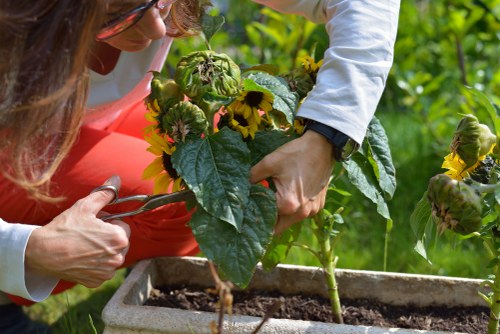
Tree pruning is not a single operation. Different trees and different problems call for different techniques. Understanding the main types helps you discuss the work more confidently and decide what is actually needed. A reputable local company will explain this clearly, especially if your tree is mature, close to a building, or already showing signs of stress.
Crown thinning
This involves selective removal of branches throughout the canopy to reduce density while keeping the overall shape. It can improve light penetration and reduce wind resistance without changing the size of the tree dramatically.
Crown lifting
Lower branches are removed to create more clearance beneath the canopy. This is often useful over paths, driveways, entrances, roads, and garden seating areas. It can also help in public-facing or commercial locations where access and visibility matter.
Crown reduction
This reduces the overall spread or height of the canopy, but should be done carefully and only where suitable for the tree. It is generally used to manage size, reduce encroachment, or relieve stress on specific limbs.
Deadwood removal
Dead branches are taken out to improve safety and appearance. This is a common maintenance task, especially for mature trees or trees near spaces where people walk, park, or gather.
Formative pruning
Young trees are pruned early to encourage strong branch structure. This can help avoid future problems, especially in gardens where space is limited and trees need to develop in a controlled way.
Not every tree should be pruned in the same way every year. A thoughtful approach respects the tree’s species and condition, as well as the practical needs of the site.
Signs Your Tree May Need Pruning
Many property owners know a tree looks “too big” or “messy” but are unsure whether action is actually needed. The following signs are useful indicators that tree pruning could help. If you notice one or more of these, it is worth asking for a professional opinion rather than leaving the tree to develop problems later.
- Branches are touching the house, roof, or guttering
- The canopy is blocking too much natural light
- Dead or broken branches are visible after wind or storms
- Branches are overhanging a neighbour’s boundary or public footpath
- The tree looks lopsided, crowded, or out of balance
- Lower branches are making it difficult to walk or park nearby
- Dense growth is stopping air movement around the tree
- New growth is crossing and rubbing within the canopy
In Enfield, where many gardens are fairly established and trees have had years to grow without intervention, these issues are common. That does not mean the tree needs drastic work. Often, tree pruning in Enfield can be handled in a measured way that restores balance and function while keeping the tree attractive.
If you are unsure whether your tree needs pruning, reduction, or just deadwood removal, requesting a quote or inspection is the easiest next step. It gives you practical advice based on the tree in front of you, not a general assumption.
What Is Included in a Tree Pruning Service?
Customers often want to know exactly what they are paying for. That is understandable, especially when the tree is close to the house or the job involves shared access. A clear service should explain what is included before work begins and what can be arranged as an extra if required.
Typical inclusions may be:
- Initial assessment of the tree and surrounding area
- Advice on the most suitable pruning approach
- Careful, selective pruning by trained tree workers
- Basic site protection where needed
- Removal of branches and arisings, if agreed
- Cleaning the working area after completion
- Discussion of any follow-up maintenance needs
Some customers also ask for pruning to be coordinated with other tree care tasks, such as hedge trimming, stump removal, or general garden clearance. Where appropriate, combining tasks can be practical and convenient, particularly for landlords and property managers who need to keep outdoor spaces presentable with minimum hassle.
Preparation checklist before the team arrives
To help the work go smoothly, customers in Enfield can usually prepare by following a simple checklist:
- Move cars away from the work area if possible
- Ensure gates or side access points are unlocked
- Keep pets and children away from the working zone
- Remove fragile items from nearby patios, sheds, or garden furniture
- Tell neighbours if branches may briefly overhang shared boundaries during work
- Point out any concerns such as cables, fragile structures, or recently planted beds
Good preparation helps the job run faster and keeps the site safer. It also means the team can focus on the pruning itself rather than on avoidable delays.
What Affects the Price of Tree Pruning?
Every tree is different, so pricing is usually based on several factors rather than a flat rate. This is one reason it is useful to request a free quote after a visit or clear discussion. The more accurately the work is assessed, the better the quote is likely to reflect the actual task.
Common pricing factors include:
- The size and height of the tree
- The species and growth habit
- The amount of material to be removed
- How easy it is to access the tree
- Whether ladders, climbing, or equipment are needed
- Proximity to buildings, roads, fences, or utilities
- Whether waste removal is included
- Any special care needed for protected or sensitive sites
In Enfield, access can have a big effect on the cost and logistics of a pruning job. A tree at the back of a long garden is different from one beside a driveway or at the front of a corner property. Parking limitations, narrow entrances, and shared access can all influence how the work is planned. A local company will take these practical matters into account when preparing your quote.
It is always sensible to ask what is included. That way you can compare like for like, especially if you are choosing between several tree surgery options.
Why Choose a Local Enfield Tree Company?
Choosing a local team for tree care brings several advantages. First, local crews are generally more familiar with the property types, road layouts, and access issues that come up again and again in the area. Second, they are more likely to give advice that is grounded in actual local conditions rather than general theory. Third, a nearby service can often respond more efficiently when a tree suddenly becomes a concern after wind, heavy rain, or noticeable seasonal growth.
There is also the matter of trust and practicality. Local customers often prefer to work with a company that understands the pace and character of the area, from busy residential streets near Enfield Town to quieter pockets near Winchmore Hill, Palmers Green, Southgate, or the borders toward Waltham Cross and the wider North London area. That local familiarity helps when planning access, keeping disruption low, and communicating clearly about the work.
Reasons customers choose a local pruning service include:
- Better understanding of local streets, parking, and access
- More practical advice for typical Enfield properties
- Useful experience with both domestic and commercial trees
- Convenient scheduling for nearby jobs
- Clearer communication about what the tree actually needs
When you are comparing companies, look for professionalism, clear explanations, and a willingness to inspect the tree before recommending work. That approach usually leads to better results than a rushed estimate based on photos alone.
Areas Covered Around Enfield
Tree pruning requests come from many different parts of the borough and surrounding districts. A local service may regularly work in and around places such as Enfield Town, Bush Hill Park, Ponders End, Southbury, Edmonton, Palmers Green, Winchmore Hill, and Southgate, as well as nearby residential and commercial locations further afield. The exact travel area may vary, but the important point is that the team understands the local mix of streets, gardens, and building types.
This matters because trees in the same borough can still need different treatment depending on the setting. A mature garden tree in a spacious rear plot may be pruned differently from a street-facing ornamental tree outside a business premises or a boundary tree shared between neighbours. Local experience helps keep the work sensible and suited to the site.
If you are not sure whether your location falls within the service area, it is usually worth making an enquiry and asking for a quote. For many customers, the deciding factors are not just distance but whether the company can deliver careful work with minimal inconvenience.
Tree Pruning for Different Property Types
Not all Enfield customers have the same priorities. A homeowner may be focused on light, privacy, and protecting the roof. A landlord may want the garden to look tidy for tenants. A business may need safer access for staff and customers. The best tree pruning service adapts to those differences.
For homeowners
Homeowners usually want a tree to look attractive while staying manageable. Pruning can improve the appearance of front gardens, clear windows, and stop branches from interfering with sheds, conservatories, and boundary fencing. It can also help preserve garden usability, especially if a tree is casting too much shade over seating or planting areas.
For landlords and letting agents
Rental properties need outdoor spaces that look maintained and do not create avoidable issues for tenants or neighbours. Pruning can reduce complaints about overhanging growth, improve safety near paths, and help keep the property presentable between tenancies.
For commercial customers
Businesses often need tree work that is neat, efficient, and well planned. Branches hanging over entrances, forecourts, signage, or parking bays can create practical and visual problems. A local team can help keep grounds tidy without disrupting normal operations more than necessary.
For schools, care settings, and managed premises
Sites with regular foot traffic need a cautious, controlled approach. Tree pruning may be carried out to reduce risk, keep walkways clear, and maintain a pleasant external environment. Scheduling and tidiness are particularly important in these settings.
When Is the Best Time to Prune a Tree?
The best time to prune depends on the species, the reason for the work, and the condition of the tree. Some trees are best pruned in late winter or early spring while dormant, while others may be better suited to light summer shaping. Flowering and fruiting trees also need careful timing if you want to preserve their seasonal display or harvest.
In many cases, urgent safety concerns override seasonal preference. If a branch is broken, diseased, or clearly dangerous, it may need prompt attention regardless of the time of year. A professional service will distinguish between routine maintenance and work that should be carried out without delay.
If you are unsure about timing, ask before booking. That way you can avoid unnecessary stress on the tree and choose a date that fits the species and your aims.
FAQs About Tree Pruning in Enfield
How do I know if my tree needs pruning or removal?
Pruning is usually the first option if the tree is otherwise healthy and the issue is branch size, shape, or clearance. Removal is considered when the tree is severely damaged, unsafe, diseased beyond recovery, or unsuitable for the site. An inspection will help determine the right approach.
Will pruning damage my tree?
When carried out correctly, pruning should support the tree rather than harm it. The key is making appropriate cuts in the right places and avoiding excessive removal. Poor pruning can cause stress, so the quality of the work matters.
Can overgrown trees be reduced safely?
In many cases, yes, but the method depends on the species, size, and condition of the tree. Some trees tolerate reduction better than others. A local tree surgeon can advise on what is realistic without weakening the tree.
Do I need permission for pruning?
Sometimes. Trees may be protected by a Tree Preservation Order or be in a conservation area. If that applies, extra care and the correct checks are needed before work begins. A reputable company should raise this during the initial discussion if relevant.
What happens to the branches and waste?
Branch removal is often included or can be arranged as part of the service. If you want the woodchip or logs kept on site, or if you want everything taken away, that should be agreed in advance.
Can pruning help with blocked light?
Yes, in many situations. Crown thinning, crown lifting, or a carefully planned reduction can let more light into the garden and rooms. The right method depends on the tree and how much change you want.
How often should trees be pruned?
There is no single rule. Fast-growing trees may need attention every few years, while slower-growing or mature specimens may need only occasional maintenance. The tree’s species, location, and condition all matter.
Book Tree Pruning in Enfield
If your tree is beginning to dominate the garden, blocking light, or creating a safety concern, now is a good time to arrange an inspection. Whether you need light maintenance, deadwood removal, crown lifting, or a more tailored pruning plan, a local service can help you make the right decision for your property.
For homeowners, landlords, and commercial customers alike, proper tree pruning brings practical benefits: better light, safer access, a tidier appearance, and healthier long-term growth. It can also prevent a small problem becoming a much larger one later on. Contact us today to discuss your tree, request a free quote, and book your service now.
For reliable tree pruning in Enfield, choose a local team that understands the area, respects your property, and works with the tree’s needs in mind. If you are ready to improve the look and safety of your outdoor space, request a free quote and take the first step toward a cleaner, better-managed tree.